
Flower – Bee – Human
Observations and Thoughts on a Summer Day in Naone
In the height of summer, every meadow transitions from colorful blooms to golden-yellow and brownish seed heads. It’s no different in Naone; however, flowers can still be found in some of the wetter spots. Here, it’s mainly the mint that catches visitors’ eyes.
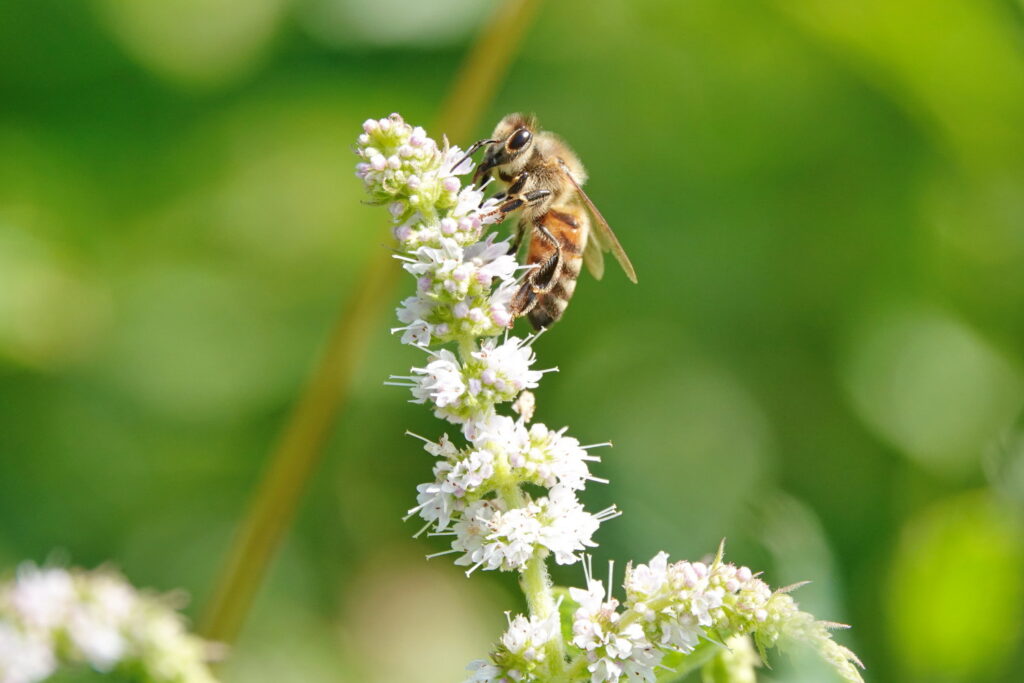
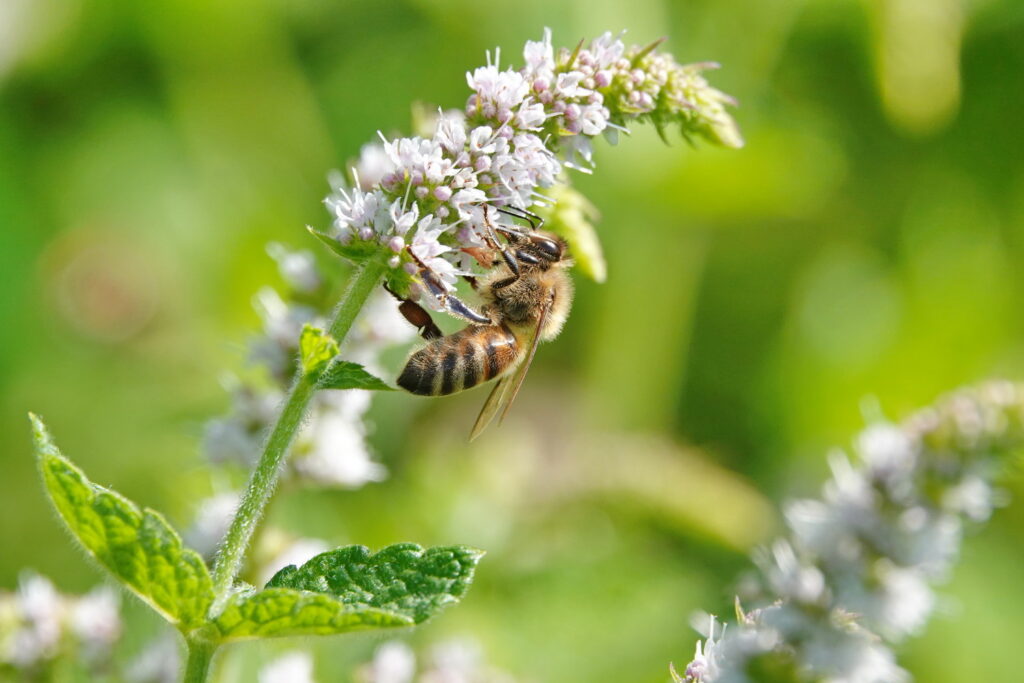
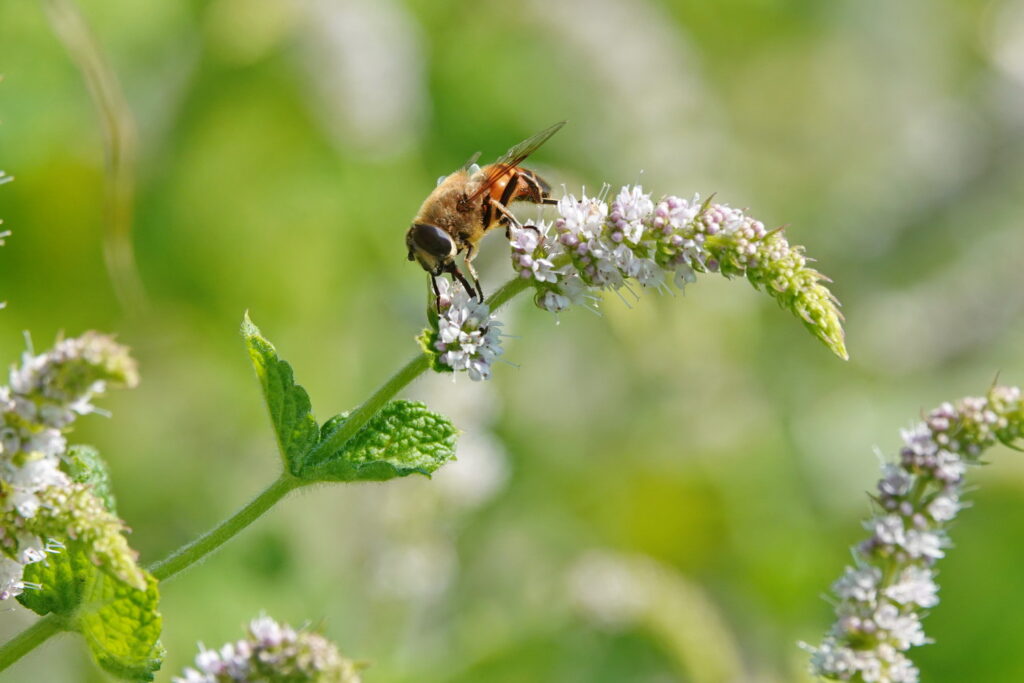
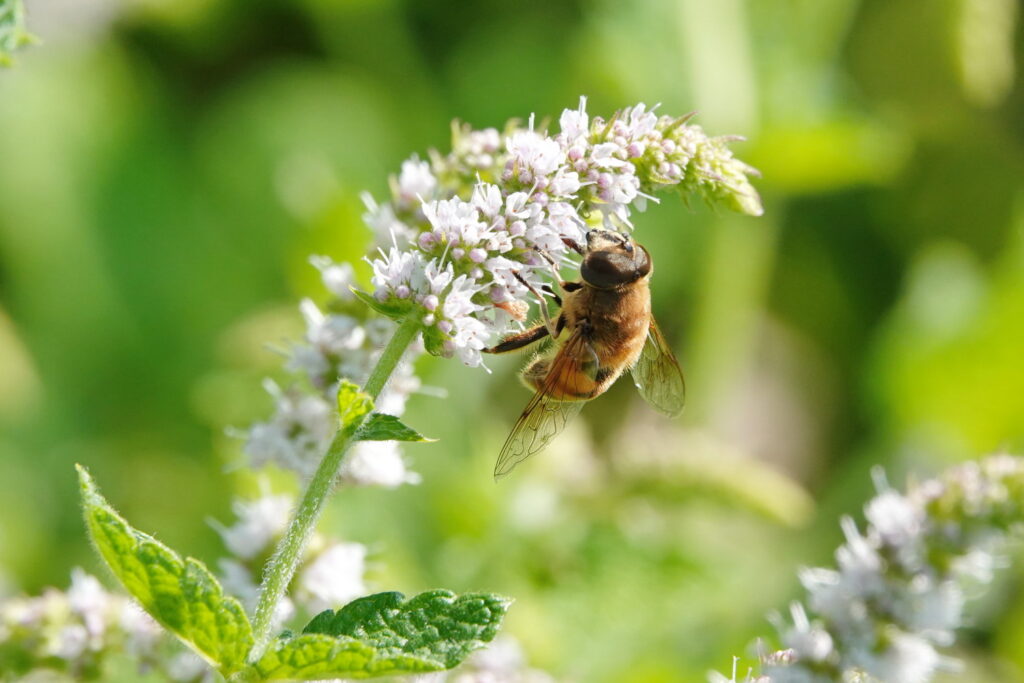
But it’s not just people: numerous insects visit the flowers and feast on the nectar. Butterflies are certainly the most striking and beautiful flower visitors, but they are not alone.
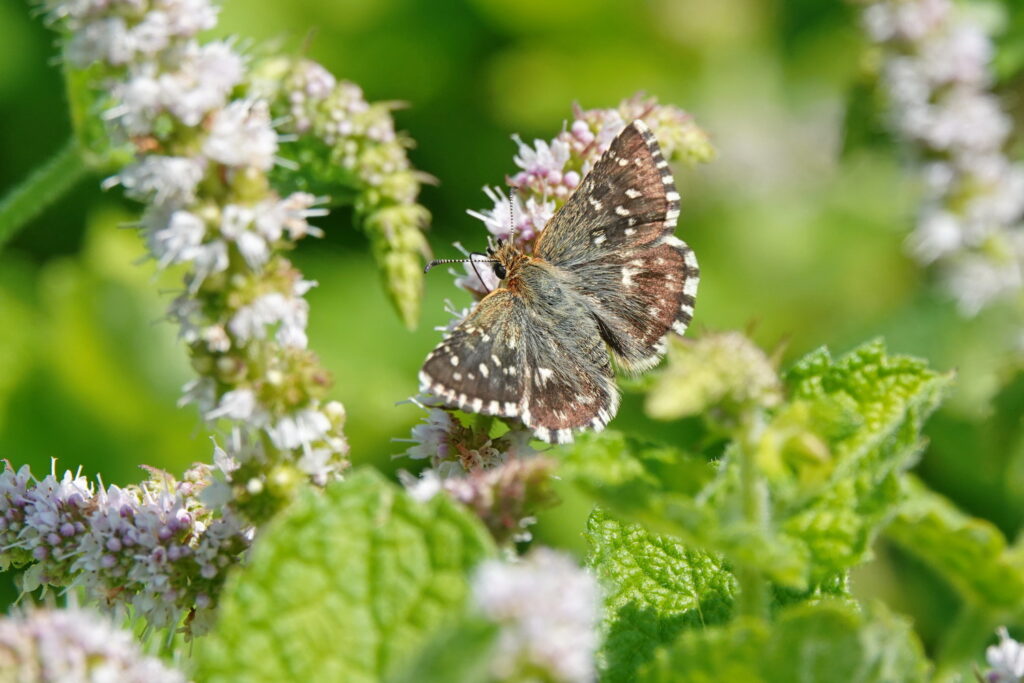
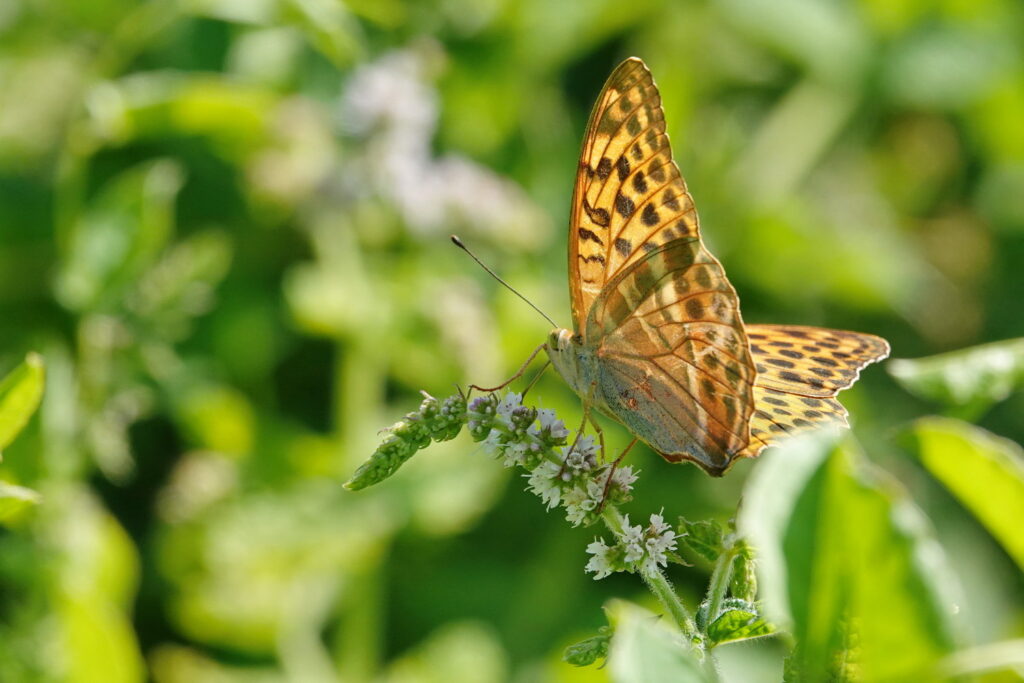
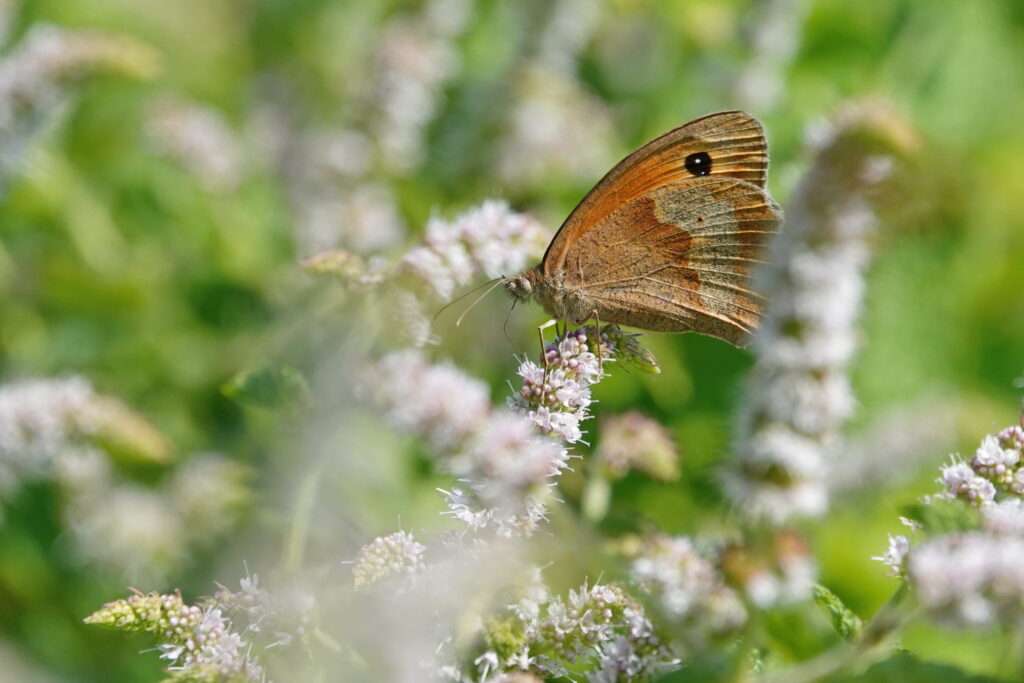
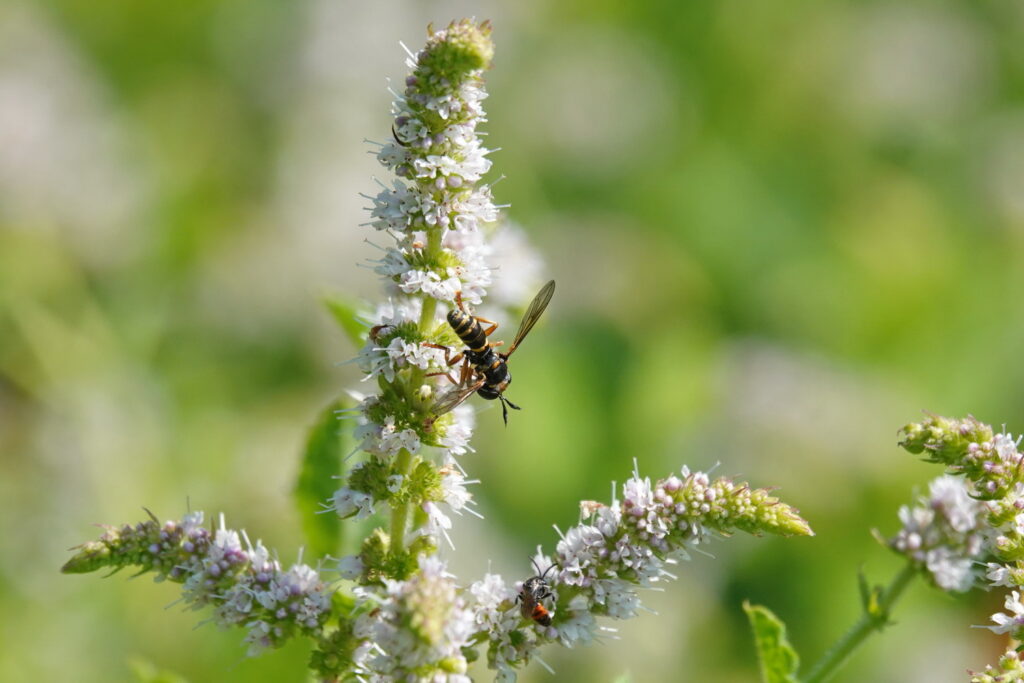
For nature lovers, even the liveliness of the flitting insects is a joy to watch; one experiences the movement and connection they create between the elements, between the cosmos and the earth.
Together with a friend, I observe this beautiful, living scene. He is a beekeeper and has a special eye for the honeybee, which he nurtures and cares for at home.
And so, from our simple observation, mental images take shape:
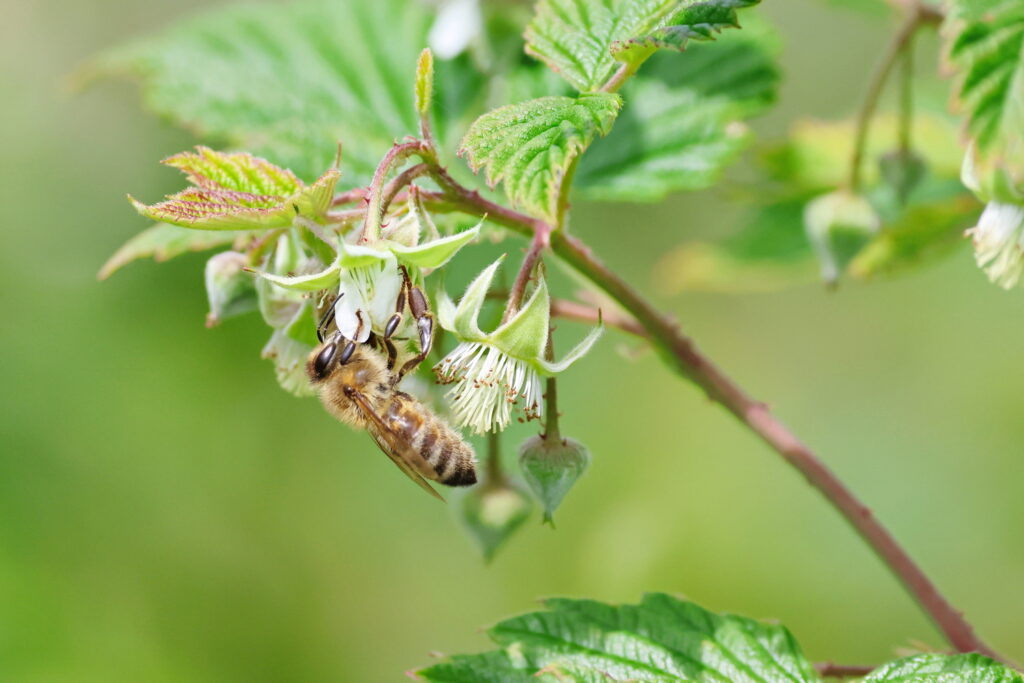
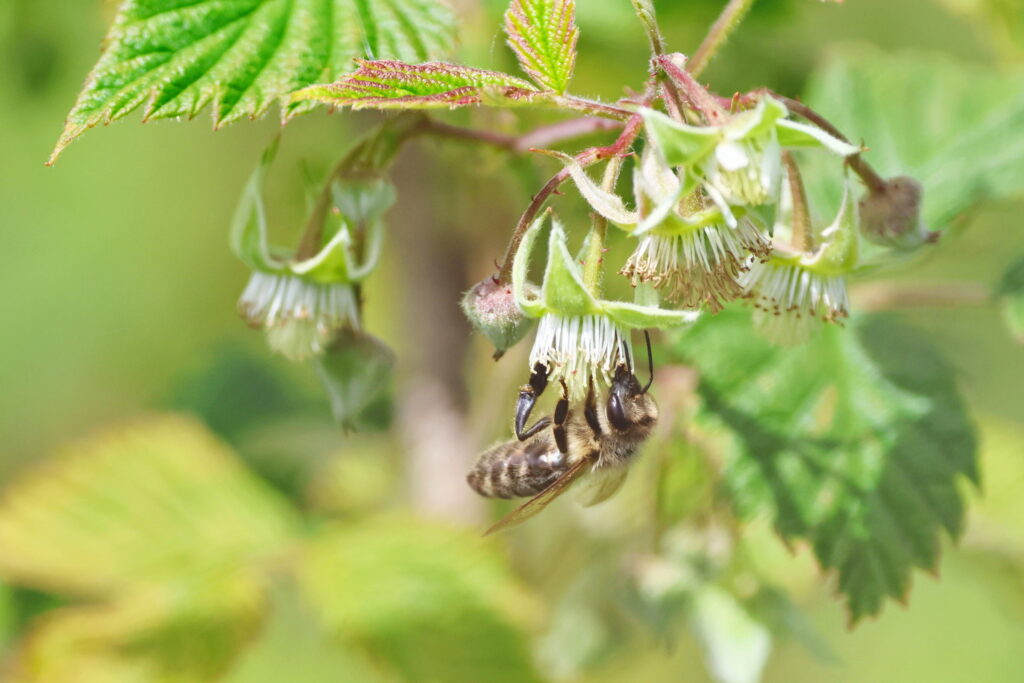
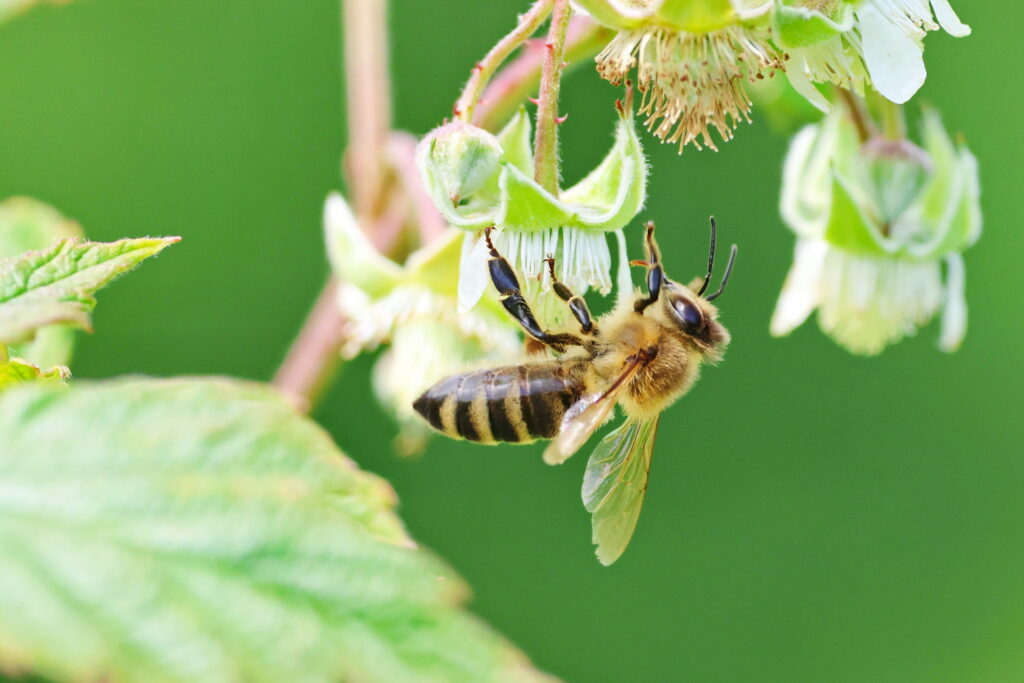
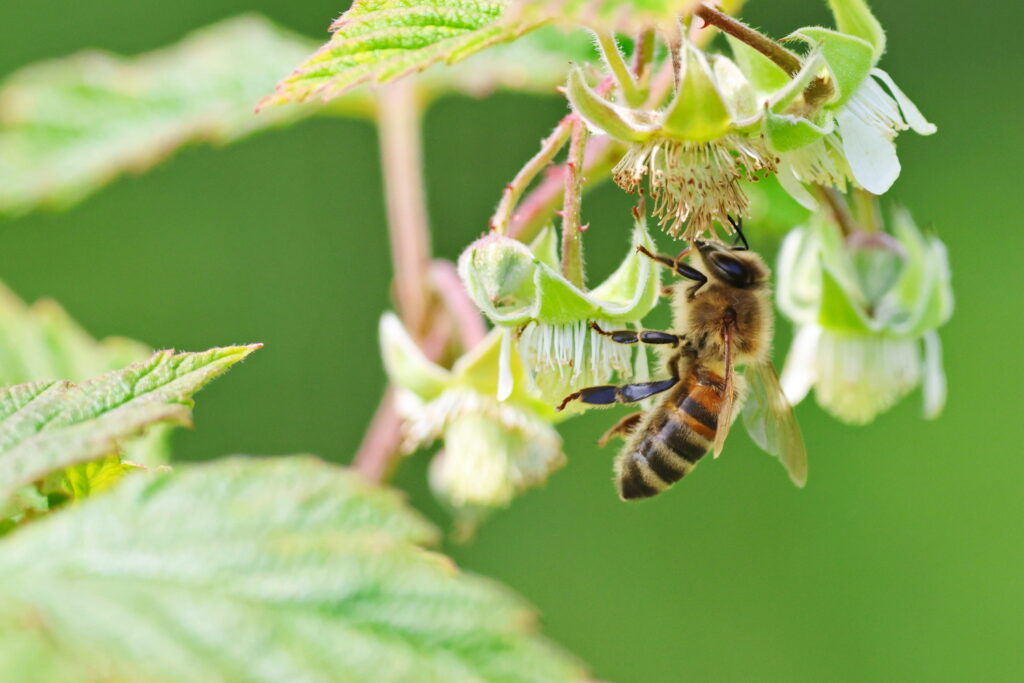
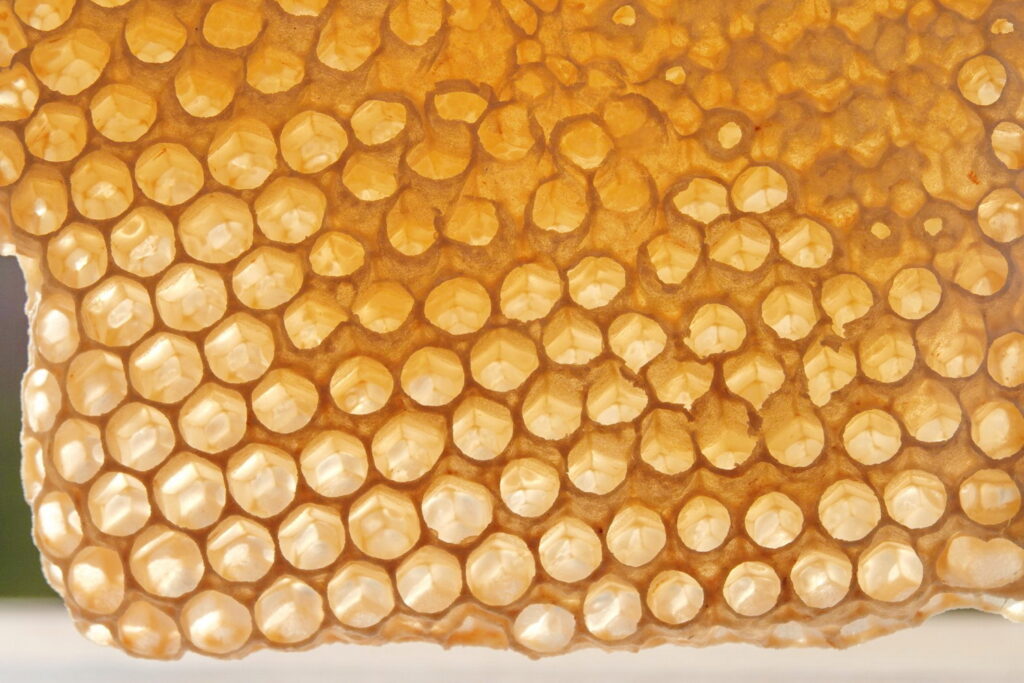
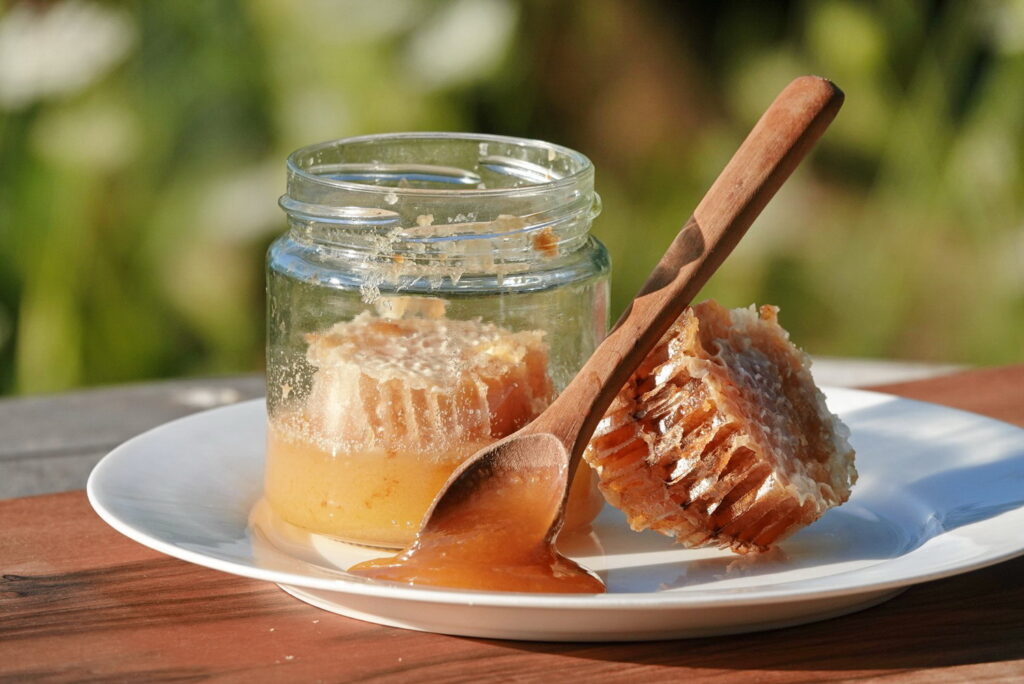
Using its proboscis, the bee sucks tiny drops of nectar from the base of the flower. It is the flower that produces the nectar—rich in sugar, minerals, and aromatic compounds—in its nectaries and offers it to the insects. The bee carries it back to the hive in its honey stomach. Bees swarm out up to three kilometers to collect nectar from the flowers. Back at the hive, the nectar—which has already been enriched with enzymes—is poured into the honeycombs, which are always uniformly hexagonal and built by other bees. This nectar, which is still far too liquid, is then transferred multiple times within the hive; that is, it is repeatedly sucked out of the comb by bees, fermented in their honey stomachs, and deposited into another comb. Fan ventilation also helps reduce the water content. The final product—a thick, mineral-enriched, fermented honey—is eventually capped within a honeycomb cell.
Honey should be regarded not only as a delicacy but also as an extremely valuable remedy. In addition to honey, bees have much more to offer human health: Propolis certainly deserves to be mentioned first, but pollen, royal jelly, and hive air also have healing effects on humans. Beeswax, as a source of light, is an indispensable part of every culture.
However, ecology does not stop at what bees and nature can offer humans.
What about the other way around? What can humans offer bees?
When thinking about responsibility, the first person that likely comes to mind is the beekeeper, who cares for the bees and harvests the honey. Next might be the farmer, gardener, or homeowner who provides a food source for the bees through a colorful variety of flowers, spread as evenly as possible throughout the entire growing season. And then there’s the consumer, who prefers organic, high-quality regional products and thus supports beekeeping.
Conscious awareness and critical thinking are gifts possessed by every human being. We can accompany the processes of nature, reflect on them, deepen our appreciation, and build a relationship with them. In addition to “what” we do, there is also “how” we do it.
In that sense, everyone can do something for nature. Ecology begins with people.
„The life within a bee colony is characterized by great wisdom and care. The bees form an ideal society of their own. Just as the entire order of nature is rightly guided by a higher wisdom, so too do the bees form a whole colony that carries out its work and duties collectively according to the highest orders and principles. Humans can partake of the honey that originates from the vast splendor of blossoms and has passed through the warmth of the bee colony. This food embodies the healing power of floral energy and thermal energy, and it fosters wisdom and order.“
Heinz Grill
„There is something expansive in sweetness—something that strives for vastness and openness. Everything that blooms tastes sweet in some way. […] Bees gather honey from the nectar of flowers in meadows and forests. It takes an enormous amount of work by the bee colony to produce even a small amount of honey. They must visit thousands of flowers and treetops to find the precious nectar.
When a person eats honey—that substance derived from the nectar of nature’s vast sea of flowers—he thereby also partakes of that vastness. He absorbs the sweetness of hundreds of flowers. […]
The vast power of the flowers lives in the sweetness of honey, which is why this remedy has a stimulating and restorative effect.
Heinz Grill
Photos and text: Lilly Zahara, 17.08.2026
Photos “Bee on rasperry”: Martin Sinzinger
Zitate von Heinz Grill:
Heinz Grill, „Ernährung und die gebende Kraft des Menschen“, Stephan-Wunderlich-Verlag , 8. Aufl. 2013, S. 137 und S. 139